Course Highlights
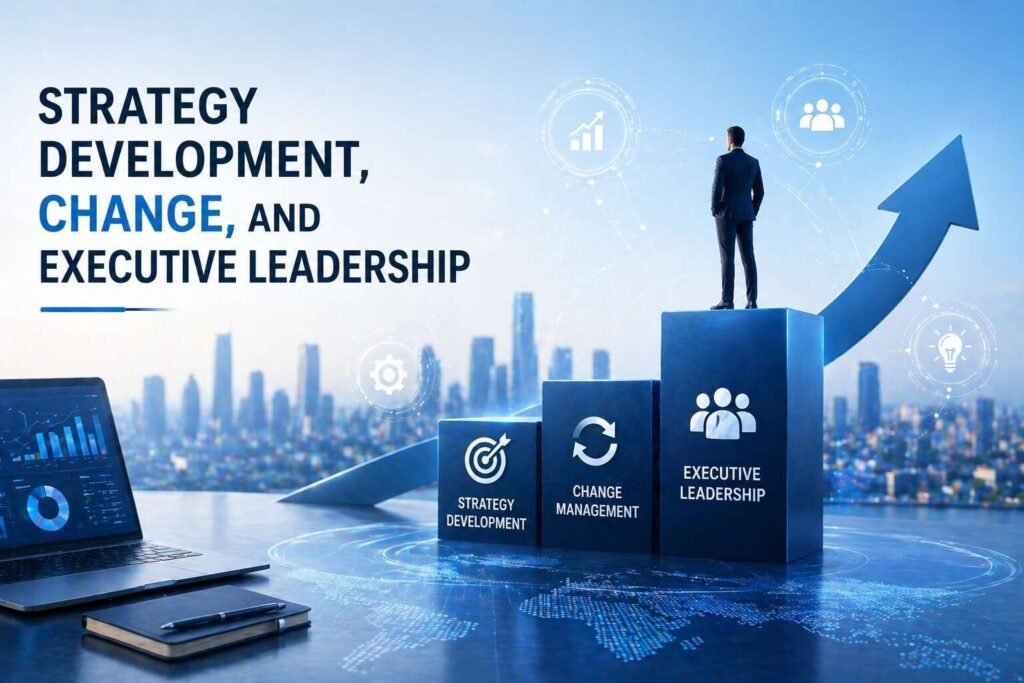
- Strategic analysis and competitive positioning
- Corporate and business-level strategy development
- Leading organizational change and transformation
- Balanced Scorecard and strategy execution frameworks
- Stakeholder engagement and leadership communication
- Executive decision-making in complex environments
Who Should Attend
This training is designed for professionals involved in strategic planning, leadership, and organizational Target Audience.
This program is designed for senior professionals responsible for leading strategy and organizational transformation, including:
- Chief Executive Officers and senior executives
- Department heads and strategic planners
- Operations managers and business leaders
- HR directors and change management specialists
- Project directors and program leaders
- Business owners and entrepreneurs
Training Methodology
This course uses a structured and practical learning approach designed to bridge the gap between strategic The training methodology follows a structured progression from strategic analysis to organizational transformation. Participants engage in expert-led lectures, strategic simulations, and collaborative workshops designed to turn strategic ideas into practical leadership actions.
Frameworks such as SWOT/TOWS, Kotter’s Change Model, and the Balanced Scorecard are used to analyze real business situations and design implementation strategies.
Participants also take part in strategy clinics and executive roundtable discussions, allowing them to explore complex organizational challenges and develop solutions applicable to their own leadership environments.
Day1
Strategic Analysis and External Positioning
- The Strategic Management Process: From intent to realization.
- External Environment Analysis: Utilizing PESTEL and Porter’s Five Forces.
- Internal Capability Audit: Resource-Based View (RBV) and Value Chain Analysis.
- Modern SWOT/TOWS Analysis: Converting insights into strategic options.
- Identifying Sustainable Competitive Advantage and Market Positioning.
Day 2
Strategic Formulation and Goal Setting
- Developing Corporate and Business-Level Strategies.
- The Blue Ocean Strategy: Creating uncontested market spaces and value innovation.
- Translating Strategy into SMART Objectives and Key Results (OKRs).
- Strategy Mapping: Visualizing the cause-and-effect relationships of success.
- Aligning Financial and Non-Financial Resources with Strategic Priorities.
Day 3
Change Management: The Human Side of Strategy
- The Psychology of Change: Understanding and overcoming organizational inertia.
- Change Models: Deep dive into Kotter’s 8-Step Process and the ADKAR Model.
- Stakeholder Engagement: Mapping influence and managing resistance.
- Communication Strategies: Crafting the “Case for Change” to inspire action.
- Building a Resilient Culture: Embedding new behaviors into the organizational DNA.
Day 4
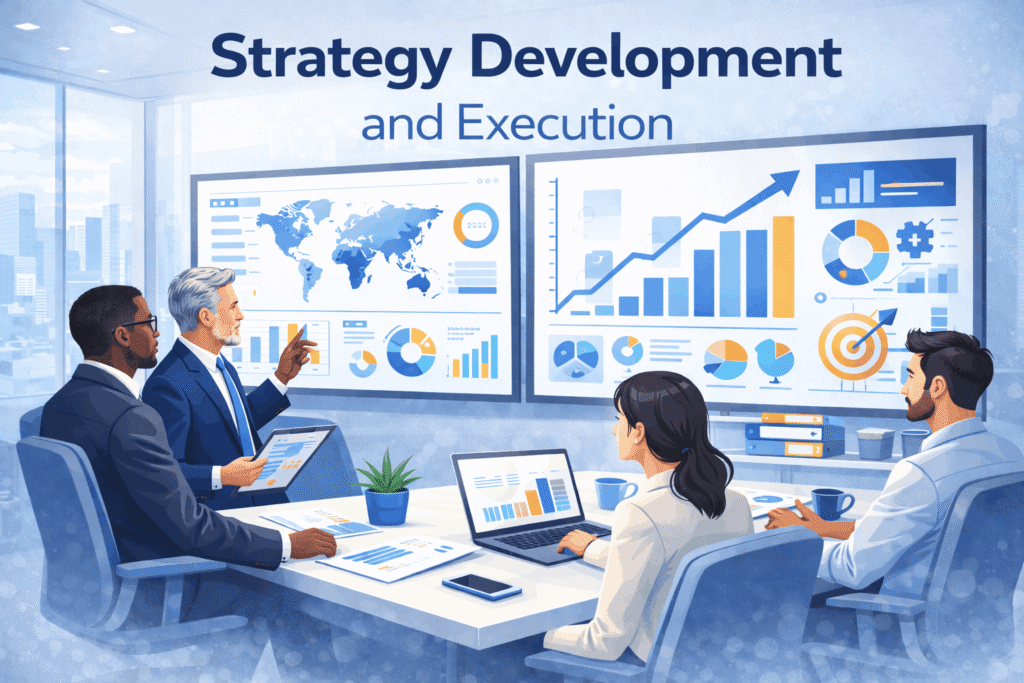
Strategy Execution and Performance Monitoring
- The Execution Gap: Identifying the barriers between planning and results.
- Operationalizing Strategy: Cascading objectives to teams and individuals.
- The Balanced Scorecard (BSC): Monitoring the four critical perspectives of performance.
- Governance for Execution: Establishing accountability and decision-making rights.
- Performance Dashboards: Selecting and tracking meaningful Key Performance Indicators (KPIs).p
Day 5
Executive Leadership and Global Strategy Dynamics
- Leading at Scale: Managing complexity in multi-unit or global organizations.
- Strategic Agility: Techniques for pivoting in VUCA (Volatile, Uncertain, Complex, Ambiguous) environments.
- Corporate Governance and Ethics: Ensuring sustainable and responsible growth.
- The Future of Strategy: Digital transformation and AI-driven business models.
- Final Executive Review: Developing a Personal Strategic Implementation Roadmap.